

Many Black women believe sustainable skincare means sacrificing results for eco-friendly packaging. That’s a myth. In reality, sustainable skincare prioritizes gentle, hydrating formulas that protect melanin-rich skin while respecting the planet. This guide reveals how to choose COSMOS-certified products designed for your skin’s unique needs, avoiding harsh actives that trigger hyperpigmentation and focusing on barrier support that delivers lasting comfort and resilience.
Table of Contents
- Understanding Sustainable Skincare: Definition And Principles
- Unique Needs Of Melanin-Rich Skin In Sustainable Skincare
- COSMOS Certification: What It Means For Sustainable Skincare
- Common Misconceptions About Sustainable Skincare
- Ingredient Insights: Hydration And Barrier Support In Sustainable Skincare
- Building A Sustainable Skincare Routine: Practical Tips
- Explore Navova’s Sustainable Skincare Solutions
- Frequently Asked Questions About Sustainable Skincare For Melanin-Rich Skin
Key takeaways
| Point | Details |
|---|---|
| Sustainable skincare blends skin health with environmental care | COSMOS-certified formulas use at least 95% natural origin and 20% organic ingredients, ensuring gentle care for melanin-rich skin. |
| Melanin-rich skin needs hydration and barrier support | Gentle, moisturizing ingredients prevent irritation and reduce post-inflammatory hyperpigmentation risk by 30-40%. |
| Avoid harsh actives that worsen sensitivity | Strong AHAs, retinoids, and aggressive exfoliants increase pigmentation concerns in Black skin. |
| COSMOS certification guarantees transparency | It verifies authentic sustainability claims, offering trust in product safety and environmental impact. |
| Simplified routines boost skin and planet health | Fewer products reduce irritation risk and minimize packaging waste. |
Understanding sustainable skincare: definition and principles
Sustainable skincare combines formulas that support your skin’s health with practices that protect the environment. For Black women in Europe, this means choosing products that hydrate, strengthen your barrier, and avoid ingredients that trigger sensitivity or pigmentation issues.
COSMOS certification guarantees skincare products meet stringent criteria on natural ingredient sourcing, biodegradability, and environmentally responsible manufacturing. To earn this certification, brands must use at least 95% natural origin ingredients and a minimum of 20% organic content by weight. Manufacturing processes must minimize energy use and waste, while packaging prioritizes recyclability and reduced plastic.
Hydration and barrier support form the core of sustainable formulas. These products focus on maintaining moisture balance and protecting your skin’s natural defenses, reducing the need for aggressive actives that can harm melanin-rich skin. Lifecycle impact matters too. Sustainable brands consider every stage from ingredient sourcing through production, packaging, and disposal.
Key principles of sustainable skincare include:
- Natural origin ingredients that nourish without synthetic irritants
- Organic farming practices that avoid harmful pesticides
- Eco-friendly manufacturing with reduced carbon footprint
- Biodegradable formulas that don’t pollute waterways
- Recyclable or refillable packaging to minimize waste
- Transparent ingredient lists with no hidden chemicals
- Gentle preservation systems that maintain product integrity
For Black women seeking minimalist skincare that respects both skin and planet, COSMOS-certified products offer a trustworthy starting point. These formulas prioritize long-term skin resilience over quick fixes that often backfire on melanin-rich skin.
Unique needs of melanin-rich skin in sustainable skincare
Black skin has distinct characteristics that demand tailored care. Melanin-rich skin has higher sensitivity and post-inflammatory hyperpigmentation risk, making gentle, barrier-supportive skincare essential to prevent long-term damage.
When your skin experiences irritation from harsh ingredients, it responds by producing excess melanin. This protective mechanism creates dark spots that can persist for months or years. Studies show melanin-rich skin faces a 30-40% higher risk of developing post-inflammatory hyperpigmentation after irritation compared to lighter skin tones.
Certain commonly used actives like strong AHAs or retinoids can cause irritations and worsen hyperpigmentation risk in melanin-rich skin. Even natural ingredients marketed as gentle can trigger reactions if they’re too concentrated or improperly formulated. Lemon extract, for example, sounds natural but contains acids that can sensitize your skin and increase sun damage risk.
Instead, focus on hydrating ingredients that strengthen your barrier without disruption. Gentle formulas support your skin’s natural functions rather than forcing aggressive turnover that leaves melanin-rich skin vulnerable.
Specific considerations for melanin-rich skin include:
- Avoiding high-concentration AHAs and BHAs that strip natural oils
- Limiting retinoid use or choosing gentler alternatives like bakuchiol
- Selecting fragrance-free products to minimize irritation triggers
- Prioritizing ceramides and fatty acids for barrier reinforcement
- Using broad-spectrum SPF daily to prevent pigmentation darkening
- Patch testing new products before full-face application
- Monitoring skin response and adjusting products seasonally
Pro Tip: Consult a dermatologist experienced with skin of color before introducing actives labeled natural but potentially irritating. What works for other skin tones may not suit your melanin-rich skin’s needs.
For gentle skincare designed for melanin-rich skin, look for formulas that emphasize hydration over exfoliation. Understanding what skincare actives do helps you make informed choices that protect rather than compromise your skin.
COSMOS certification: what it means for sustainable skincare
COSMOS certification provides third-party verification that products meet rigorous sustainability and safety standards. For Black women in Europe seeking authentic eco-friendly skincare, this certification cuts through greenwashing and marketing hype.
COSMOS-certified products must have at least 20% organic ingredients and 95% natural origin by weight, plus meet environmental manufacturing and packaging criteria. The certification body audits brands annually to ensure ongoing compliance, making it harder for companies to make false claims.
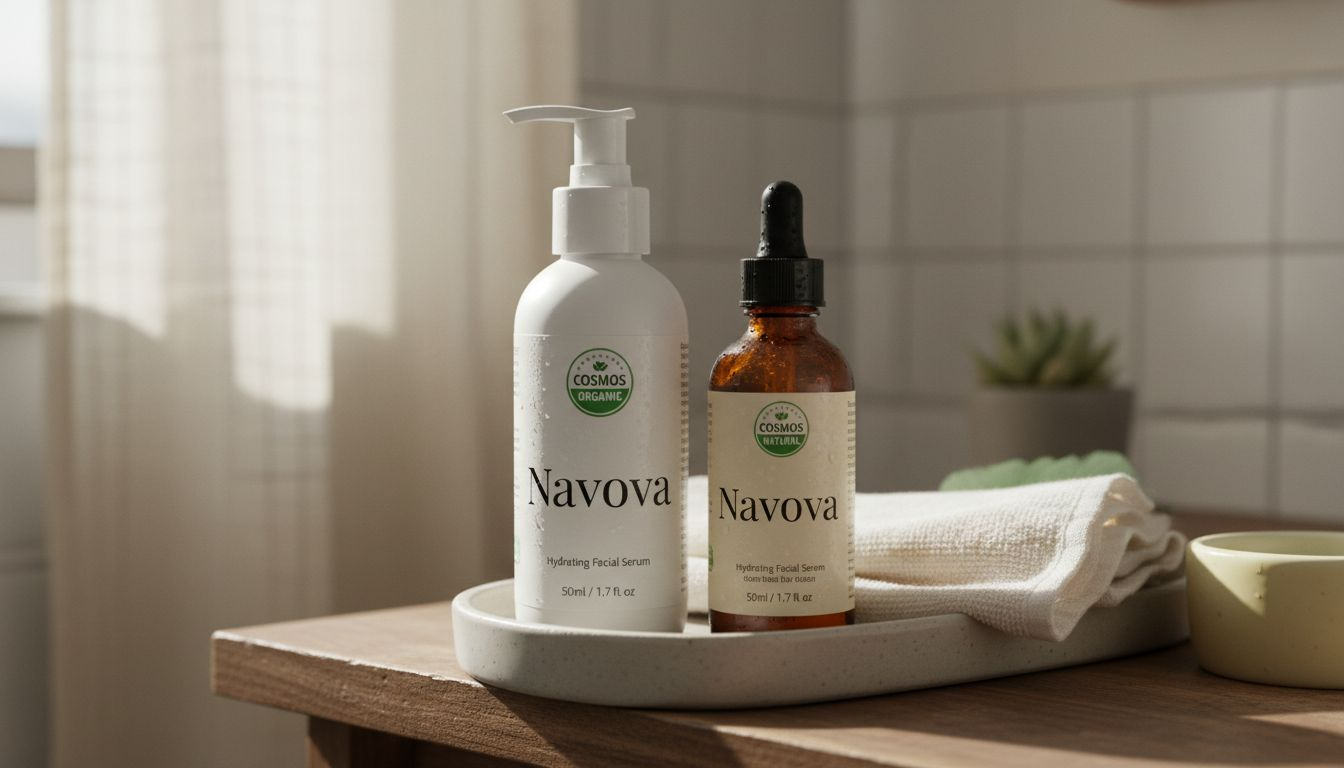
Natural origin ingredients come from plants, minerals, or other renewable sources. They undergo minimal processing to preserve their beneficial properties. Organic ingredients meet additional standards, grown without synthetic pesticides or genetically modified organisms.
Ecological manufacturing standards require brands to minimize water usage, reduce energy consumption, and limit waste production. Packaging must be recyclable, biodegradable, or refillable. Plastic use is restricted, and brands must justify any non-recyclable materials.
COSMOS certification benefits consumers in four key ways:
- Transparency: Complete ingredient disclosure with no hidden chemicals or vague terms
- Trust: Independent audits verify claims rather than relying on brand promises
- Environmental impact: Reduced carbon footprint from sourcing through disposal
- Skin suitability: Gentle formulas designed to work with your skin, not against it
Non-certified products may contain synthetic preservatives, petroleum derivatives, or undisclosed fragrances that irritate melanin-rich skin. They might use vague terms like “natural” or “eco-friendly” without meeting any verified standards. COSMOS certification eliminates this guesswork.
For Black women prioritizing hydration as the foundation of skincare, COSMOS-certified products often feature moisture-binding ingredients in effective concentrations. The certification ensures these formulas remain gentle enough for daily use on sensitive, melanin-rich skin.
Common misconceptions about sustainable skincare
Three widespread myths prevent Black women from embracing sustainable skincare that could transform their skin health.
First, many believe sustainable products sacrifice effectiveness for environmental values. Research shows 72% of consumers report satisfaction with natural, COSMOS-certified product performance, proving efficacy is not compromised. Sustainable formulas often work better because they support your skin’s natural functions instead of disrupting them with harsh synthetics.
Second, the assumption that natural always means safe overlooks how certain plant extracts can irritate melanin-rich skin. Essential oils, citrus extracts, and some botanical actives cause inflammation that triggers hyperpigmentation. Natural doesn’t guarantee gentleness, which is why ingredient knowledge matters more than origin alone.
Third, some dismiss COSMOS as a marketing gimmick rather than recognizing its rigorous standards. Unlike vague eco-claims, COSMOS requires annual audits, ingredient percentage verification, and manufacturing practice reviews. Brands can’t fake their way through this certification.
Three common misconceptions and their corrections:
- Myth: Sustainable skincare works slower than conventional products. Reality: Gentle formulas build lasting results by strengthening your barrier rather than creating temporary improvements through irritation.
- Myth: Natural ingredients can’t preserve products effectively. Reality: Plant-based preservation systems protect formulas without synthetic chemicals that sensitize melanin-rich skin.
- Myth: COSMOS certification is easy to obtain. Reality: Strict audits and percentage requirements make COSMOS one of the most demanding sustainability certifications in skincare.
Read ingredient lists carefully and verify certifications on product packaging or brand websites. Look beyond marketing language to understand what’s actually inside the bottle.
Pro Tip: Don’t judge sustainability only by packaging appearance. Some brands use elaborate eco-themed designs while their formulas contain irritating synthetics. Check for COSMOS certification logos instead.
For guidance on building a minimalist skincare routine free from unnecessary products, focus on certified formulas that deliver multiple benefits in simple steps.
Ingredient insights: hydration and barrier support in sustainable skincare
Three powerhouse ingredients form the foundation of effective sustainable skincare for melanin-rich skin. Hydrating, barrier-supportive ingredients like ceramides, glycerin, and hyaluronic acid improve moisture retention and skin resilience without irritation.
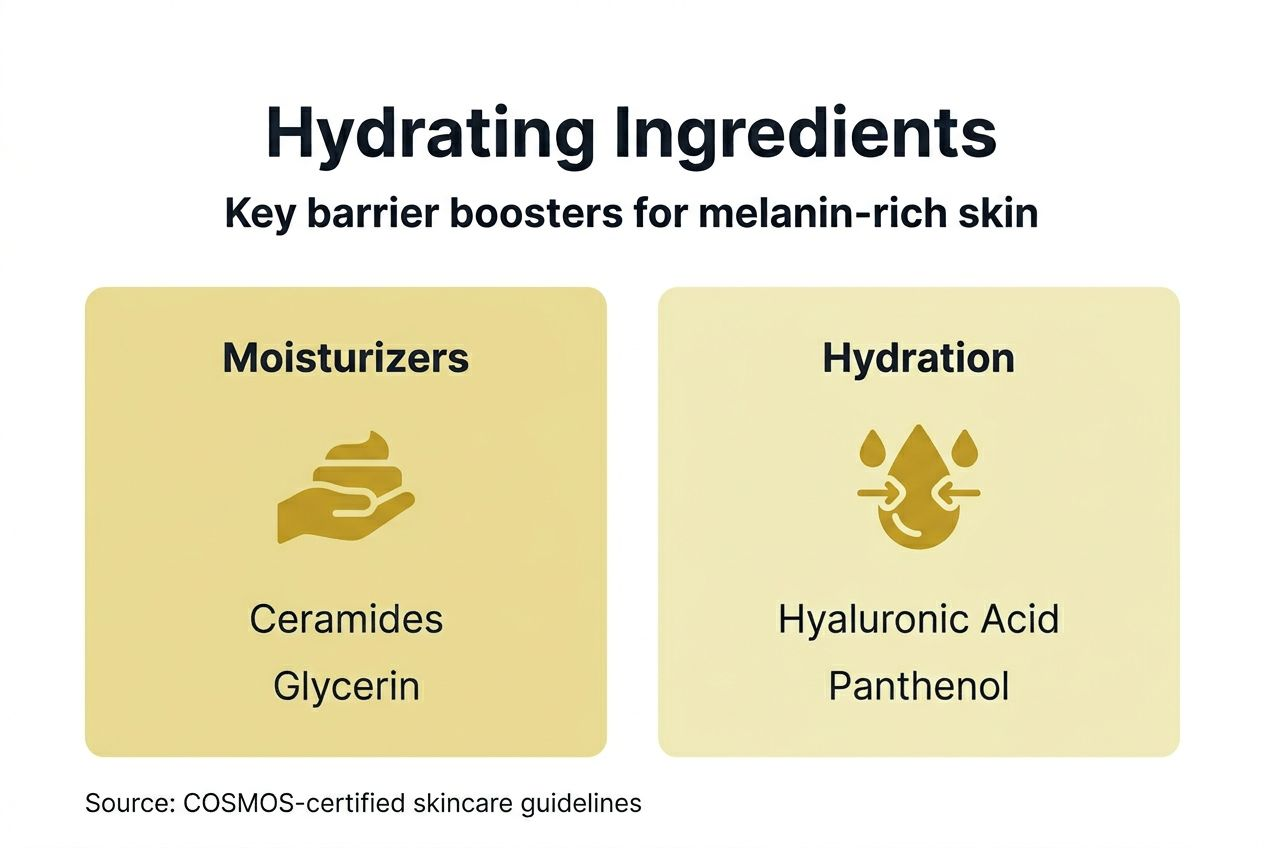
Ceramides are lipids that naturally exist in your skin’s outer layer. They create a protective seal that prevents water loss and blocks irritants. When your barrier weakens from harsh products or environmental stress, ceramide levels drop. Replenishing them through skincare restores your skin’s natural defenses.
Glycerin is a humectant that draws moisture from the air into your skin. It works across different humidity levels, making it reliable for European climates. Glycerin also supports your skin’s natural moisturizing factors, improving hydration from within rather than just coating the surface.
Hyaluronic acid holds up to 1000 times its weight in water. Different molecular weights penetrate various skin depths, providing layered hydration. Low-weight molecules reach deeper layers while high-weight versions hydrate the surface and create a moisture-locking film.
| Ingredient | Primary Benefit | Best For | Key Property |
|---|---|---|---|
| Ceramides | Barrier repair | Sensitive, compromised skin | Lipid structure matches natural skin composition |
| Glycerin | Moisture retention | All skin types, especially dry | Works in low and high humidity conditions |
| Hyaluronic Acid | Deep hydration | Dehydrated, dull skin | Multi-weight formulas provide layered moisture |
Avoid irritants common in non-sustainable formulas:
- Synthetic fragrances that cause contact dermatitis
- Denatured alcohol that strips natural oils
- Sulfates that disrupt your moisture barrier
- Silicones that create temporary smoothness but prevent hydration penetration
- High-concentration preservatives that sensitize over time
Pro Tip: Choosing multi-weight hyaluronic acid formulas boosts hydration across all skin layers. Look for products listing sodium hyaluronate in multiple molecular sizes on the ingredient label.
For understanding how hydration benefits Black skin specifically, focus on barrier-reinforcing ingredients that address transepidermal water loss. Explore natural oils that support hydration as complementary options to water-based serums.
Building a sustainable skincare routine: practical tips
Creating a sustainable routine tailored to melanin-rich skin requires strategic product selection and thoughtful implementation. Follow these steps to build a gentle, effective regimen:
- Start with a COSMOS-certified cleanser that removes impurities without stripping natural oils
- Add a hydrating serum featuring hyaluronic acid or glycerin as the primary active
- Layer a ceramide-rich moisturizer to seal hydration and reinforce your barrier
- Apply broad-spectrum SPF 30+ daily to prevent hyperpigmentation from UV exposure
- Introduce one new product at a time, waiting two weeks to assess skin response
- Simplify by choosing multi-benefit products that reduce total items in your routine
Packaging sustainability matters as much as formula quality. Look for these features:
- Refillable containers that reduce single-use plastic waste
- Glass bottles that are infinitely recyclable without quality loss
- Post-consumer recycled materials in packaging components
- Minimal outer boxes and unnecessary wrapping
- Pump dispensers instead of jars to maintain product integrity
- Clear recycling instructions printed on packaging
Verify product ingredients by checking the full INCI list on packaging or brand websites. COSMOS logos should appear clearly, often with certification numbers you can verify online. Be wary of products claiming natural status without third-party certification backing those claims.
Simplifying your routine reduces irritation risk and supports barrier health. Each additional product introduces potential sensitizers and increases the chance of ingredient interactions that trigger inflammation. For melanin-rich skin prone to hyperpigmentation, fewer products often mean better results.
Pro Tip: Rotate products seasonally to adjust hydration needs without overwhelming your skin. Use richer creams in winter when indoor heating depletes moisture, then switch to lighter gels in humid summer months.
Explore different types of skincare routines designed specifically for melanin-rich skin. A minimalist approach often delivers superior results compared to complicated multi-step regimens that stress your barrier.
Explore Navova’s sustainable skincare solutions
Navova creates COSMOS-certified skincare that aligns with everything you’ve learned in this guide. Our gentle, hydrating formulas prioritize barrier support over aggressive actives, delivering comfort and resilience for melanin-rich skin.
Our Hydration Support Gel combines multi-weight hyaluronic acid with barrier-reinforcing ingredients designed specifically for sensitive, melanin-rich skin. It provides layered moisture without heaviness or pore-clogging.
Ready to find your perfect sustainable routine? Take our personalized skincare quiz to discover which products match your unique skin needs. Our quiz considers your skin’s current condition, concerns, and goals to recommend COSMOS-certified solutions that work with your skin, not against it.
Explore our complete skincare collection to see how we embody sustainable, gentle care in every formula. Each product reflects our philosophy: skincare should support your skin’s natural strength while respecting the planet that sustains us all.
Frequently asked questions about sustainable skincare for melanin-rich skin
What defines sustainable skincare for Black women?
Sustainable skincare for Black women combines COSMOS-certified natural formulas with ingredients that specifically address melanin-rich skin’s needs for hydration and barrier support. It avoids harsh actives that trigger hyperpigmentation while minimizing environmental impact through eco-friendly sourcing, manufacturing, and packaging.
How can I tell if a product is truly sustainable?
Look for COSMOS certification logos on packaging, which verify at least 95% natural origin and 20% organic ingredients plus environmental manufacturing standards. Check the full ingredient list for synthetic irritants, and research the brand’s transparency about sourcing and production practices.
Which ingredients should I avoid to prevent hyperpigmentation?
Avoid high-concentration AHAs, strong retinoids, synthetic fragrances, denatured alcohol, and undisclosed essential oils that can irritate melanin-rich skin. Even some natural ingredients like citrus extracts and certain botanical actives may trigger inflammation that leads to dark spots.
Can sustainable products hydrate as well as conventional ones?
Yes, sustainable formulas often hydrate more effectively because they use barrier-supportive ingredients like ceramides, glycerin, and hyaluronic acid that work with your skin’s natural functions. Research shows 72% consumer satisfaction with COSMOS-certified product performance, proving efficacy matches or exceeds conventional options.
How do I start a sustainable skincare routine easily?
Begin with three COSMOS-certified essentials: a gentle cleanser, hydrating serum, and ceramide moisturizer. Add broad-spectrum SPF for daytime protection. Introduce products one at a time over two-week periods to monitor your skin’s response. For personalized guidance, explore gentle skincare types suited to melanin-rich skin’s unique needs.
